

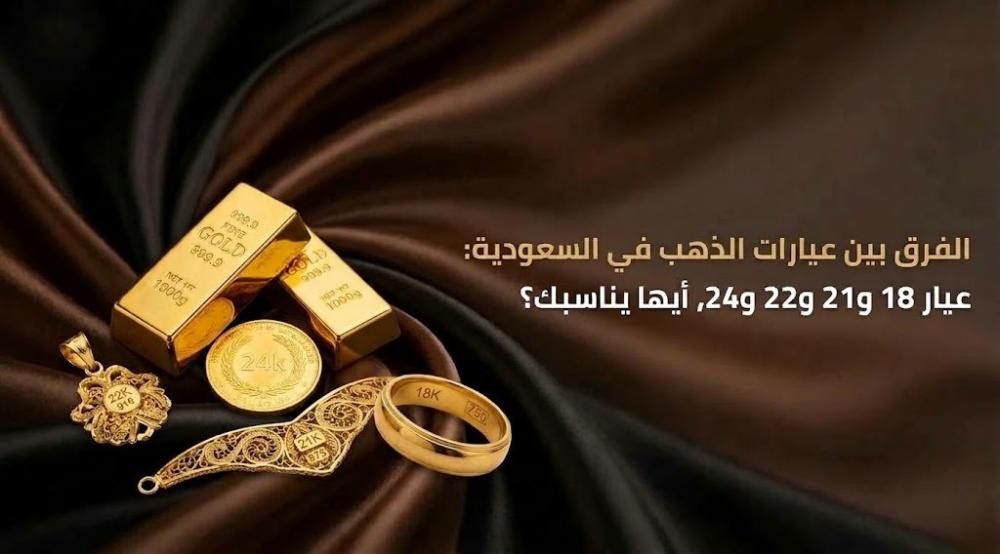
The difference between gold karats is the share of pure gold in a piece: 24k gold is the purest at 99.9%, followed by 22k at about 91.6%, then 21k at 87.5%, then 18k at 75%. That share decides the price, the hardness and the color: the higher the karat, the more pure gold, the higher the value per gram and the softer the metal. Which one suits you depends on your purpose: 24k for saving, 21k for daily wear, 22k for occasions, and 18k for stone-set and delicate pieces.
Buyers in Saudi Arabia have extra context that general guides skip. The executive regulation of the Precious Metals and Gemstones System sets four statutory karats for gold articles, requires a clear hallmark and an itemized invoice, and 15% VAT is added. The Saudi Press Agency’s report on Jeddah’s markets notes that 21k is the most in demand for adornment and 24k is preferred for saving. This guide explains the difference between gold karats in the market’s own terms, then gives you a way to work out the price and read the hallmark, so you can choose the right karat before you pay.
The Difference Between Gold Karats at a Glance
- 24k gold: the purest, soft, suited to saving and bullion rather than daily wear.
- 22k gold: higher purity and a richer color, suited to occasions and luxury pieces.
- 21k: a balance of purity and hardness, the most in demand for adornment in the Saudi market.
- 18k: the hardest of the four, suited to delicate and stone-set designs and to white and rose gold.
That is the difference between gold karats in brief, and the sections below give the details and the sources.
Gold Purity Percentage in Each Karat
The gold purity percentage is calculated by dividing the karat by 24, so 21k means 21 parts of gold out of 24, or 87.5%, with the rest being added metals such as copper and silver to raise hardness and adjust color. The percentage is stamped on pieces in parts per thousand:
- 24k: 999.9 parts per thousand, about 99.9%
- 22k: 916 parts, about 91.6%
- 21k: 875 parts, or 87.5%
- 18k: 750 parts, or 75%
The higher the gold purity percentage, the higher the price per gram, because you are paying for more gold. Remember also that the karat of gold measures the purity of the metal, while the carat of a diamond measures the weight of the stone; the two terms are different.
How Much Pure Gold Are You Actually Buying in Each Karat?
A practical way to understand the difference between gold karats is to calculate the pure gold inside a piece: weight × (karat ÷ 24). A 10-gram piece contains about 9.99 grams of pure gold in 24k, about 9.17 grams in 22k, 8.75 grams in 21k and 7.5 grams in 18k.
That explains why a 10-gram piece in 18k costs less than the same weight in 21k in terms of gold value: you are buying 7.5 grams of pure gold instead of 8.75. But the gold purity percentage here is a comparison tool, not a verdict on quality; 18k is not “lower quality,” it is harder and suits a different purpose. Once you read the gold purity percentage this way, comparing two pieces becomes clearer than comparing price per gram alone.
The Difference Between 18k and 21k Gold
This is the question that comes up most before buying, and the difference between 18k and 21k gold shows in four things:
- Purity: 21k is 87.5% and 18k is 75%, so 18k has about 14% less gold per gram.
- Hardness: 18k is harder because it contains more added metals, so it holds stones and keeps fine detail, while 21k is slightly softer but handles daily wear well.
- Color: 21k is a richer, warmer yellow and 18k is slightly paler; 18k is also the most used for white and rose gold.
- Price: the gold value per gram of 18k is lower, but the final price of the piece depends on design and making charges, so do not assume 18k is always cheaper.
The bottom line on the difference between 18k and 21k gold: choose 21k for a piece worn often where you want higher purity, and choose 18k for a stone-set or delicate piece that needs hardness. The SPA report on Jeddah’s markets, published via Malay Mail, notes shopper interest in pieces in 18k and 21k, and market experts there see 21k as the most in demand for adornment. According to the description of its all products page (Arabic page), Madina Jewelleries’ range includes jewelry in 18k and 21k.
24k Gold: The Purest, but Not for Wearing
24k gold is almost pure gold at 99.9%, with a very bright yellow color. In the difference between gold karats, it sits at the top for purity but at the bottom for hardness. It is soft and prone to scratching and bending, so it is used for bars and coins more than for jewelry worn daily, although some pieces can be made from it. The gold value of 24k per gram is about 14% higher than 21k.
That is why the difference between gold karats shows most clearly when you compare 24k with 21k, and why 24k gold is preferred for saving and investment, as the market experts in the SPA report noted. For that purpose the store has a 24k gold bars section (Arabic page). Remember that making charges on bars are usually lower than on jewelry, and that VAT has special rules for qualifying investment metals, so confirm them with the Zakat, Tax and Customs Authority before any large transaction.
22k Gold: When Is the Difference Worth Paying For?
22k gold is about four percentage points purer than 21k, its color is slightly richer, and its gold value per gram is about 4.8% higher. It is relatively softer, so it suits pieces worn at occasions and weddings more than rough daily use. This is the closest difference between gold karats, between 21k and 22k. If higher gold purity matters to you in occasion jewelry, 22k gold is a good choice, and you can look at the 22k gold section (Arabic page) at Madina Jewelleries.
If you want a piece for every day, the small gap between 21k and 22k rarely justifies the price gap, and 21k is more practical.
What About 19k and 14k?
You may come across 19k or 14k in some advertisements and in markets outside Saudi Arabia. 19k is theoretically 79.2% pure and 14k is about 58.5%. But the executive regulation limits the statutory karats for gold articles to 24, 22, 21 and 18, and requires the hallmark to carry the actual karat matching one of them. Here it is not enough to know the difference between gold karats; you need to know which are statutory. If you are offered a piece in 19k or 14k, ask about its hallmark, source and invoice before buying, and check the current text of the regulation, since rules can change.
Which Karat Costs More, and How Does the Price Change?
The difference between gold karats in price follows each karat’s share of 24k, so the price per gram of a karat is roughly the 24k price per gram × (karat ÷ 24). A hypothetical example for illustration only: if 24k costs 500 per gram, then 22k comes to about 458.3 SAR, 21k about 437.5 and 18k about 375 SAR. A 10-gram piece would then have a gold value of about 4,583 in 22k, 4,375 in 21k and 3,750 in 18k. These are hypothetical figures, not market prices.
Two more elements are then added to the gold value: making charges, higher for complex and stone-set designs, and VAT at 15%, as the ZATCA guideline explains. That is why an 18k piece with a complex design can cost more than a simple 21k piece; compare by weight, karat and making charges, not by karat alone.
Example: Two Pieces in Different Karats, Which Is Better Value?
This example is entirely hypothetical for illustration and does not reflect market prices. Assume 24k costs 500 per gram:
- Piece A: a 10-gram chain in 21k with making charges of 15 per gram. Gold value is 4,375 and making charges 150 SAR, a total of 4,525 before VAT, containing 8.75 grams of pure gold.
- Piece B: a 10-gram bracelet in 18k with a delicate design and making charges of 40 per gram. Gold value is 3,750 and making charges 400 SAR, a total of 4,150 before VAT, containing 7.5 grams of pure gold.
Piece B is only 375 cheaper even though the difference in gold value is 625 SAR, because its higher making charges used up 250 of that gap. The lesson is that the difference between 18k and 21k gold in the final price can be narrower than someone comparing price per gram alone expects, and that design changes the arithmetic, so the difference between gold karats in the final price is not simply the difference in purity.
Which Karat for Which Purpose?
Now that you understand the difference between gold karats, choose by purpose:
- Saving and investment: 24k gold in bar form.
- Daily wear: usually 21k, or 18k for slim pieces. You can look at the bracelets and bangles section (Arabic page) as an example of pieces worn constantly.
- Occasions and bridal sets: 21k or 22k gold depending on family custom and design, and you can browse sets and collections (Arabic page).
- Diamonds and gemstones: 18k for its hardness in holding stones.
- White and rose gold: usually 18k, because the color comes from the metals mixed with the gold; if you are sensitive to nickel, ask about the alloy.
Choose the Karat in Four Questions
To turn the difference between gold karats into a quick decision, answer these questions in order:
- Is my goal saving or adornment? For saving choose 24k gold bars; for adornment go to the next question.
- Will the piece be worn every day? If so choose 21k or 18k, because their hardness handles friction. If it is for occasions, 22k gold is a good option.
- Is the piece stone-set or finely designed? If so 18k is best for holding the stones.
- What is my budget? Work out the gold value from weight and karat, then add making charges and VAT, and compare the difference between 18k and 21k gold by weight, not by total price.
After these four questions the difference between gold karats stops being a list of numbers: each karat has a purpose, and the best karat is the one that matches your purpose, budget and way of using the piece.
Does the Difference Between Karats Affect Resale?
Yes, but not the way many expect: the difference between gold karats affects resale less than making charges do. A buyer of used gold usually values the piece by weight and purity, so the value of the pure gold stays tied to the market price whatever the karat. The making charges and VAT you paid at purchase are usually not fully recovered, which is why the gap between the buying and selling price is larger for complex pieces than for bars.
So 24k gold in bar form loses the least to making charges, and simple pieces in 21k or 22k gold with low making charges come closer to it than complex designs. To protect a piece’s value, keep the invoice stating weight and karat, and avoid rough polishing that can erase the hallmark.
The Difference Between Gold Karats in the Saudi Climate
Gold itself does not rust, but a piece is pure gold only in 24k. With sweat, skin-care products, perfume and incense, the added metals or stones can be affected and the shine fades. In coastal cities such as Jeddah, Dammam and Khobar humidity is higher, so keep pieces dry and separate in soft pouches, and apply perfume before wearing them. This is where the difference between gold karats shows in practice: the harder karats such as 21k and 18k handle daily scratches better than 24k and 22k.
Statutory Karats and the Hallmark in Saudi Arabia
The Executive Regulations of the Precious Metals and Gemstones System (in Arabic) set four statutory karats for gold articles: 24, 22, 21 and 18, so the difference between gold karats is also a legal one in Saudi Arabia. They require a piece to be stamped with the Kingdom’s mark, a registered trademark and the actual karat, clearly, and an identification card if its size does not allow a hallmark. The invoice must include the business name, tax number, weight, type, description and price of the piece, plus the return and exchange policy. For stone-set pieces the invoice must state the weight of the non-gold part and the weight and price of the gold. The regulation also distinguishes between gold and plated or clad items and requires the latter to be stamped accordingly.
Do not rely on a home test to learn a piece’s karat: a magnet does not identify karat and acid testing may damage the piece. Laboratory testing is done through a laboratory designated by the Saudi Standards, Metrology and Quality Organization.
How to Verify the Karat When Buying Online
Buying online is permitted and common, but you cannot touch the piece, so rely on the written details, whatever the difference between gold karats you are comparing:
- The product page: look for the weight in grams and the karat. If either is missing, ask the store before paying.
- Sorting and comparison: category pages in the store allow sorting by best sellers, top rated or price, and offer a product comparison tool. Use it to put two pieces side by side, then open each page to compare the difference between 18k and 21k gold or 22k gold by weight and making charges.
- The invoice: make sure it itemizes weight, karat, tax and the return policy.
- On delivery: read the hallmark on the piece and match it with the invoice.
Common Mistakes When Comparing Karats
These mistakes spoil your understanding of the difference between gold karats when buying:
- Assuming the highest karat is always best: a daily-wear piece may suffer from the softness of pure gold.
- Judging karat by color: color is affected by added metals and plating, and the hallmark is the reference.
- Comparing two pieces without weight and making charges: the gold weight can differ widely.
- Confusing the karat of gold with the carat of a diamond.
- Buying a piece in a non-statutory karat without checking the hallmark and source.
Frequently Asked Questions
What is the difference between gold karats?
The difference between gold karats is the share of pure gold: 24k is about 99.9%, 22k about 91.6%, 21k is 87.5% and 18k is 75%. It determines hardness, color and price per gram.
What is the difference between 18k and 21k gold?
21k is purer at 87.5%, richer in color and suits daily wear; 18k is harder at 75%, suits stone-set and delicate pieces, and has about 14% less gold per gram.
What is the gold purity percentage of 21k?
The gold purity percentage of 21k is 87.5%, meaning 21 parts out of 24, written as 875 parts per thousand.
Is 24k gold suitable for wearing?
Some pieces can be made from it, but it is soft and prone to scratching and bending, so 24k gold is better for bars and saving than for daily pieces.
Is 22k gold better than 21k?
22k gold is slightly purer and richer in color, but about 4.8% more expensive per gram and less hard. It is not better in every case; it suits occasions, while 21k is more practical for daily use.
Which karat is the most expensive?
The higher the karat, the higher the price per gram: 24k is the most expensive, then 22k, 21k and 18k. Making charges and 15% VAT are added to the gold value.
Which karat is the most common in Saudi Arabia?
Market experts cited by the Saudi Press Agency say 21k is the most in demand for adornment and personal use, while 24k is preferred for saving.
Are 19k or 14k gold available in Saudi Arabia?
The statutory karats for gold articles in the regulation are only 24, 22, 21 and 18, so ask about the hallmark and source before buying a piece in any other karat.
How do I know the karat of a gold piece?
Read the hallmark stamped on the piece (999.9, 916, 875 or 750) and check the invoice that states weight and karat. For laboratory confirmation, testing is done through a laboratory designated by the Saudi Standards, Metrology and Quality Organization.
Is the difference between gold karats large in the final price?
It is large in gold value, but it can narrow in the final price because of making charges and design. An 18k piece with a complex design can be close in price to a simple 21k piece, so compare by weight, karat and making charges.
Conclusion
The difference between gold karats lies in purity, hardness, color and price: 24k gold for saving, 21k for daily wear, 22k gold for occasions, and 18k for stone-set and delicate pieces, and the difference between 18k and 21k gold comes down to one question: do you want higher purity for wearing or higher hardness for the design? Before any purchase, check the hallmark and the itemized invoice, and compare by weight and making charges, not by total price.
To put it into practice, browse all products or 22k gold, or explore the rest of the range at Madina Jewelleries.